I shall start this post with a confession. I am a bit of car buff. This not usually the first thing an urbanist confesses to – often it is loudly the opposite. By being a car buff I am not meaning automatically liking Jeremy Clarkson or wanting to secretly mow down cyclists and rule the road. It’s more that I have had an enduring interest in cars since I was very young. I was the 9 year old that knew far too much car trivia and could recognise and talk for hours about cars I saw on the road or that my parents or relatives owned. There was a pecking order of liking relatives based on their cars (Jaguars or unusual foreign cars gained points, Morris Marinas or worse still, Morris Minors, lost points).
Still to this day I always notice cars wherever I go, perhaps in the way others notice the plants and trees en route or the music playing in a place they visit. I once had a boss who all she could say about her family car was “it’s blue” and I found that just amazing that was all that she noticed about it. I have a similar attitude to her but about music – I can barely tell one piece or song from another, which amuses some of my friends no end. It just has never interested me and I’ve never really bought any music in my life.
Anyhow back to cars. When I was first planning a trip to Japan in 2016 (and repeated in 2019) one of the highlights was firstly to see a very different car culture up close and secondly to reflect on how it may affect how Japanese cities work and are laid out (the urban design bit). While Japan is more outward facing and similar to Western countries than some commentators give credit for, there are interesting home country rules and norms in how things are done. Cars are no exception.
While in western countries we are used to seeing or owning the many mainstream models from Toyota, Nissan and Mazda and the like, there is a whole segment of Japanese car production that is solely for its home market. One of the most noticeable local vehicles to western eyes is the diminutive Kei car. What is particularly interesting to me as a designer and urbanist is the design of Kei cars themselves, as a response to national regulations, but also how they are used in and impact Japanese daily life. The Kei car is an example of a specific regulatory relationship between the State, the population and the individual car owner and this regulatory approach relates to wider urban issues – how parking is configured, how houses are designed and how streets are laid out. This bigger picture is why I felt the Kei car warranted this blog post on Urbanthoughts. So for those who are not car buffs bear with me while I explain a little about this breed of vehicle.
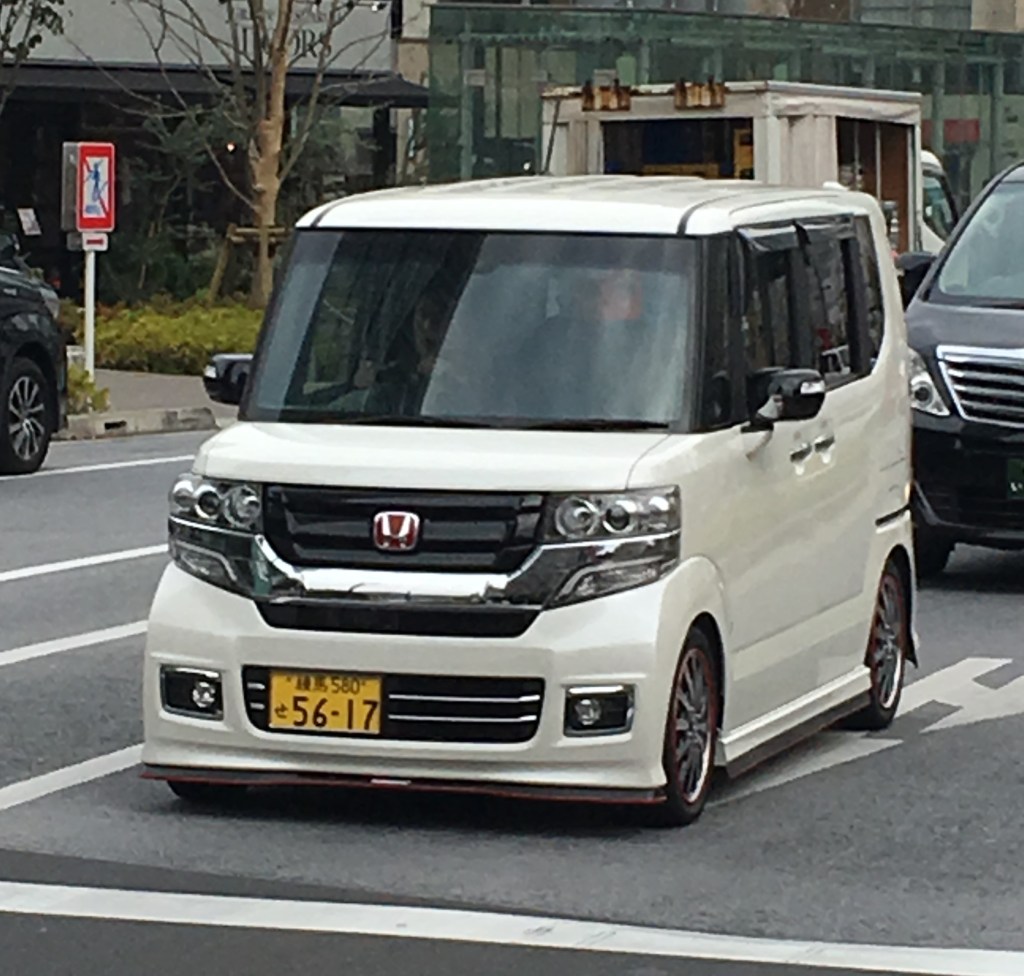
The Kei car is a category of small car (in Japanese Kei means “light”) which has tax and insurance advantages to the Japanese consumer, as well as not requiring prior proof of ownership of a parking space (which is required for other private cars in Japan). The category has existed since 1949 and was originally an encouragment for post war families to be able to afford a basic family car. While in the UK and other markets there have been tax advantages for particular vehicles periodically (eg for bubble cars in the 1950s Suez fuel crisis and the Reliant and other three wheelers in the 1960s and 1970s) none have persisted as long or been as pervasive as the Kei car regulations.
In exchange for the fiscal advantages the car designers are restricted in the dimensions of the car (maximum of 1.48m wide and 3.4m long), engine capacity (660cc) and engine power (64 PS). Because the dimensions are a maximum, every centimetre is used to the full, so they are typically tall, flat sided and very boxy. They are primarily for urban use, are quite affordable to buy and clearly a doddle to park and manoeuvre. More of the parking later. Inside they are often very creatively styled – more akin to a personalised living room, with stylish co-ordinated materials and plentiful technology – TV screens, Hi-Fis and connectivity. They also carry in true Japanese style lots of slightly amusing model names in English – the Suzuki Hustler, the Daihatsu Naked and the Toyota Tank, to name three I saw.
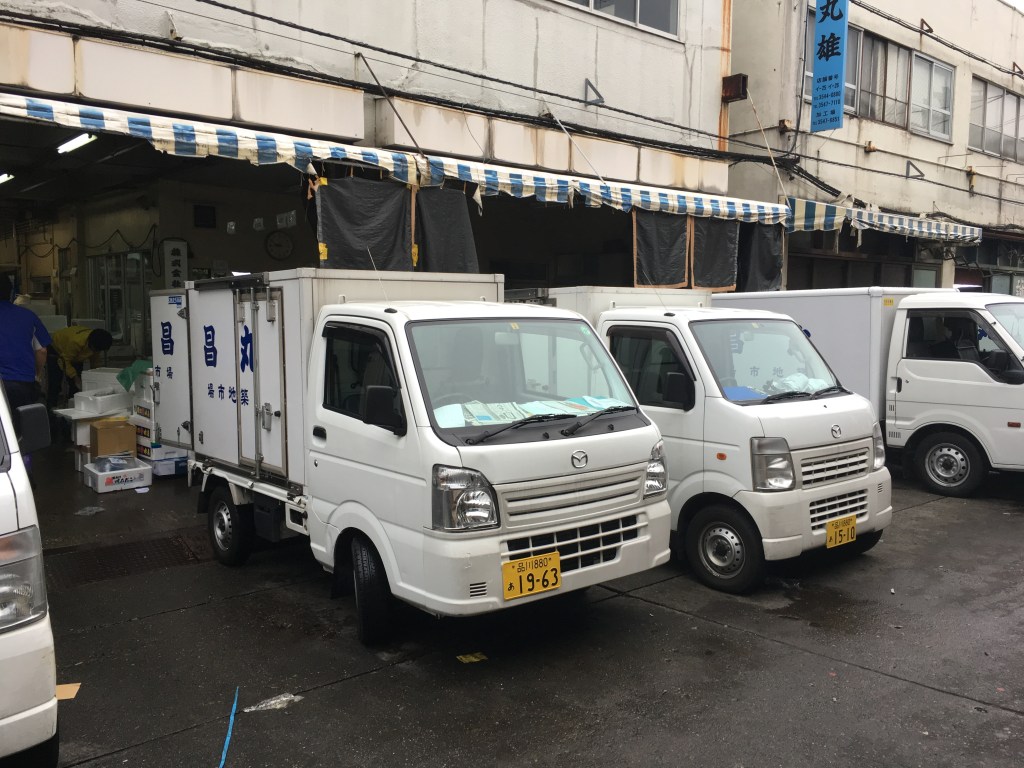
The Kei concept applies beyond private cars – you can get Kei people carriers, Kei vans and Kei pick up trucks. As an example of the commercial variety, below are some Kei trucks at the famous Tsukiji fish market in Tokyo. It’s a pity there isn’t a person standing next to them to truely understand how dinky they are. Yet these are not toys or joke advertising vehicles. These are vehicles earning a living for their owners; in this case setting off pronto to deliver fish to sushi restaurants across the city. What is interesting in this bustling scene is they are the predominant vehicle. Few operators seem to want anything bigger. In the West our commercial vehicles get ever bigger (The Ford Transit, a typical van in the UK, has doubled in size since originally launched in the late 1960s). In Japan everything has stayed small and they seem to like it that way.
The popularity of the small Kei vehicles for the private buyer is equally strong. Unlike in London where you may see the odd Smart car, in Japan approximately one third of the Japanese new car sales are of Kei car category vehicles and they are particularly popular in cities, reaching easily 50% of the car population. This means when standing at any junction you will see a whole flock of these diminutive cars going about (as shown below in Kanagawa).
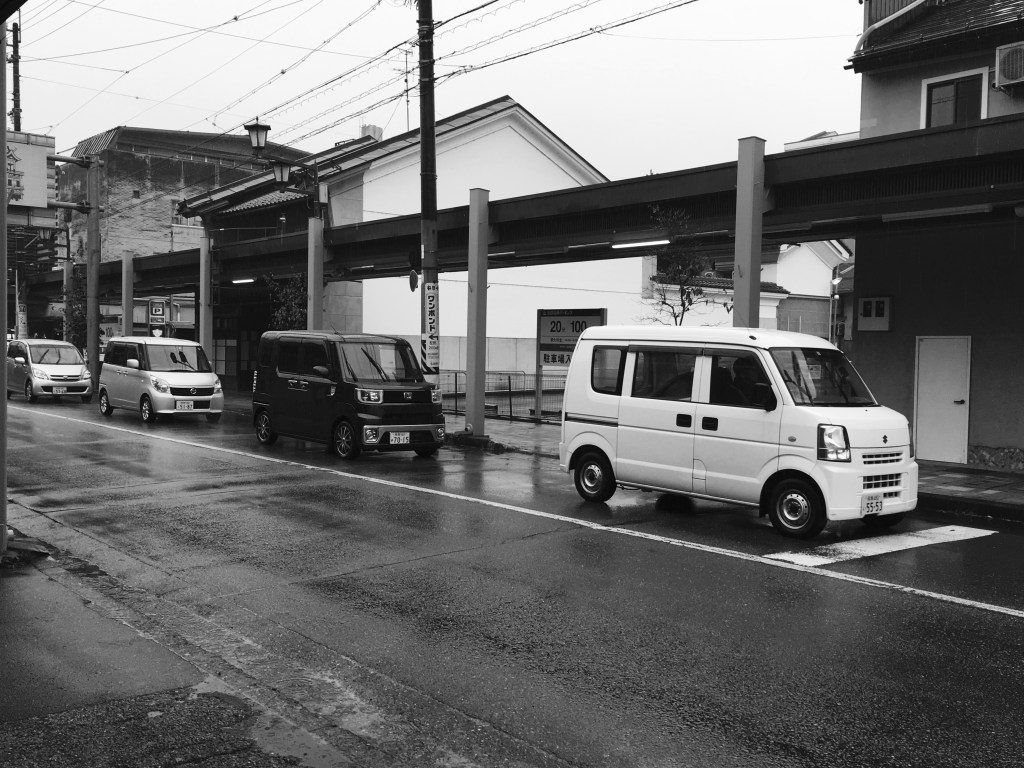
You really notice how little space they take up, particularly how narrow they are. Just as a comparision, a modern UK market small car, such as a Ford Fiesta, is about 25 cm wider and 55cm longer. So if two Ford Fiestas pass each other on a street, they need half a metre more room to pass than a pair of Kei cars. The comparison with larger cars is even more extreme. A modern mid-size SUV like a Ford Kuga or Nissan Qashqai would require a metre extra road width if two were to pass each other or to park next to each other.
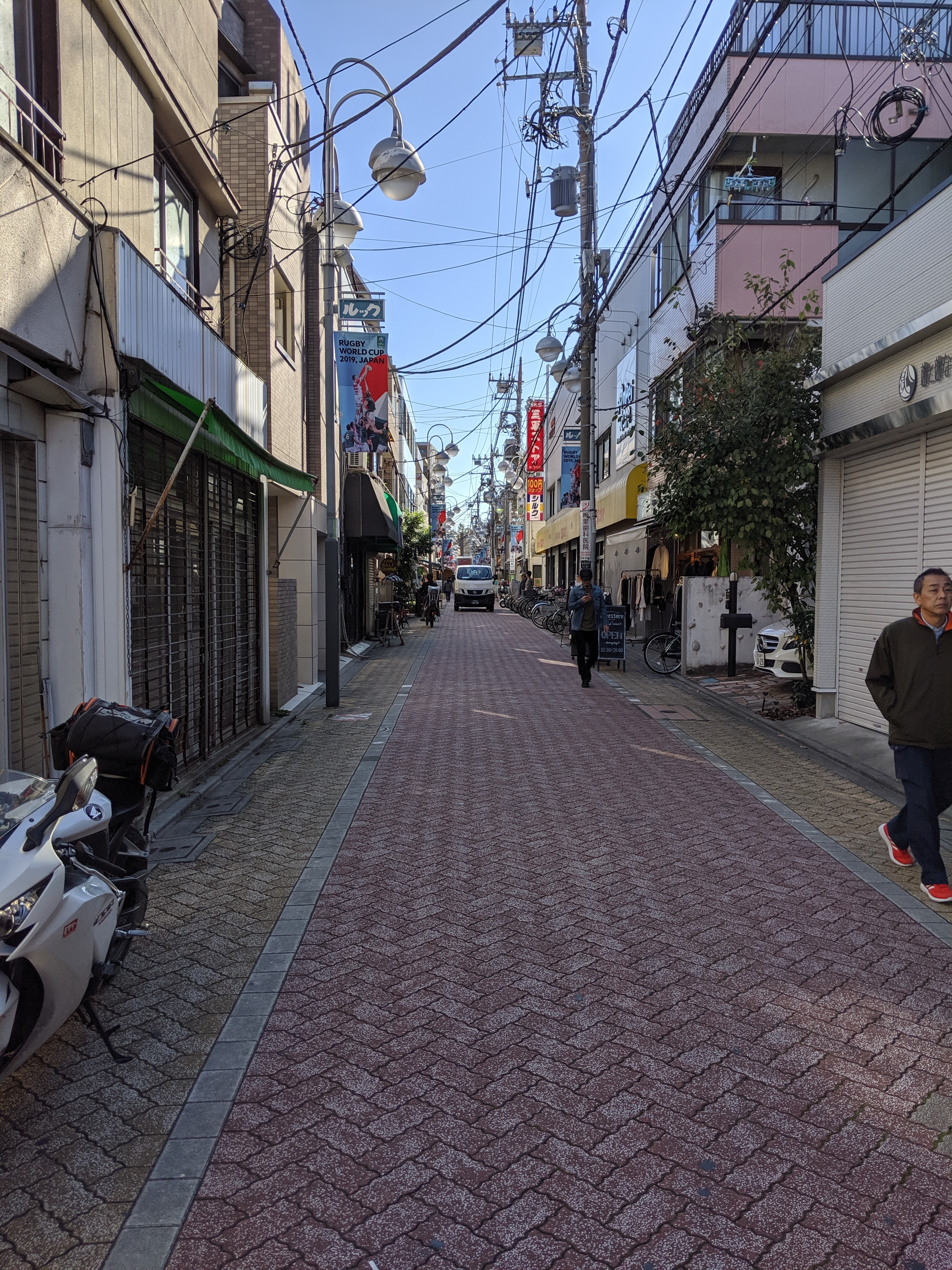
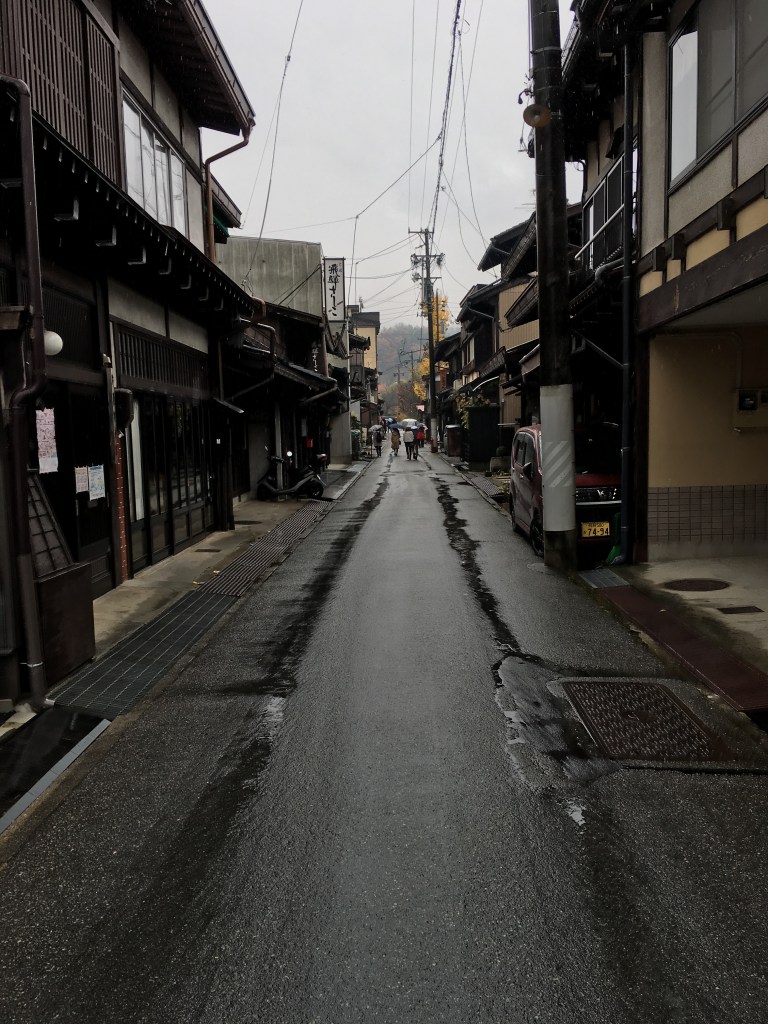
You might wonder why is this particularly interesting other than to fellow car buffs? Well these very small cars have been part of how cities are configured – they are response to and a shaper of the built environment and its regulation and management. Below is a typical Japanese minor street. A single lane width is perfectly usual for a neighbourhood high street, as we have here. As far as I could tell these were not one way streets. So it accomodates bi-directional traffic. Given so many of the commercial and private cars are a maximum of 1.48m wide there is sufficient space to accomodate passing vehicles or for deliveries to be made without blocking the street, even if a more normal sized vehicle is in the street as well. Keeping to the single carriageway width is incredibly efficient in terms of use of land and allows high densities of dwellings and businesses, without necessarily building tall.
One of the side benefits of a Kei car’s dominant shape as a “box” is that the Japanese, who I think are the neatest parkers in the world, can park their vehicles very close to walls and carriageway edges. The image below is in a historic street in Takayama in central Japan. The Kei car is so neatly parked it’s almost hidden behind the electricity pole, sideways on to the property and right on the boundary line with the street.
Now when you look at the Kei car’s influence on housing things get very interesting. Here is a typical Tokyo house, complete with Kei car parked in a car port undercroft. This is the usual way parking is accomodated in a Japanese residential street. There is no on street parking as far as I could see, anywhere. Every dwelling provides for parking within the curtilage of the property. You can see this parking spot here is just the right size for a Kei car and allows ingress and egress by the driver and passengers, as required, without wasting space.
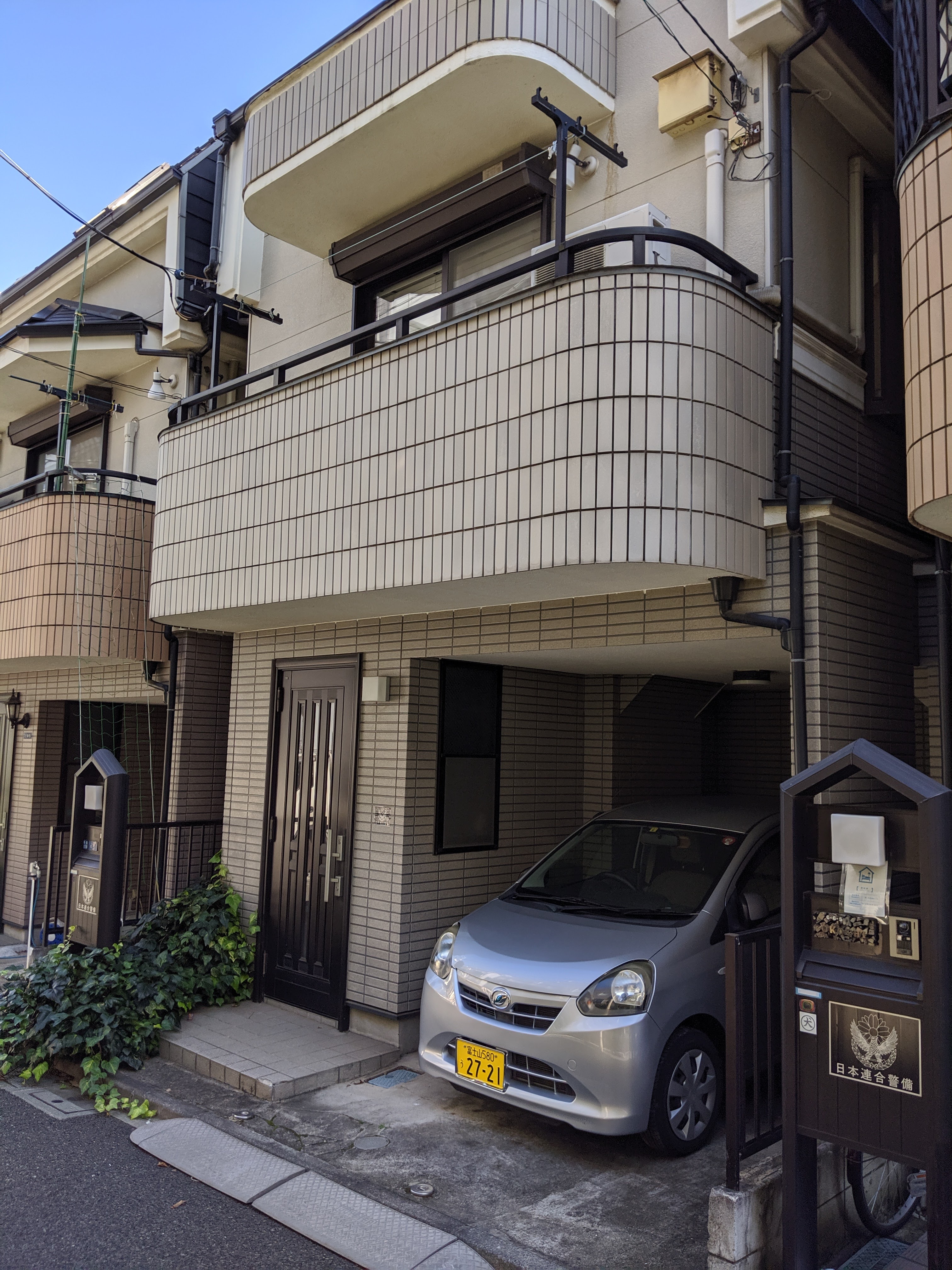
What I find fascinating is the owner, or whoever commissioned this house, specified the car parking spot just to accomodate a Kei type car. You may think this is perhaps a bold move by the owner to be so specific. However given the size of the Kei car is prescribed in legislation, and has been since 1949, a Japanese property owner can have some confidence that in the future a wide choice of the same size car will be available and they will be able to continue to park in the same way for the life of the property. The size of the parking space also allows the rest of the ground floor of the house to be given over to useful accomodation, allowing a good sized entrance door and lobby. Also given there is no on street public parking available in residential streets the owner has a vested interest in also continuing to use his parking space as originally intended. Also the wider neighbourhood benefits from the Kei regulations – the private car is kept off the street leaving the single carriage way road clearer for those moving about by foot, bicycle or other vehicles.
Alongside the considerable benefits of the Kei car system there are constraints that a huge swathe of consumers in Japan accept. This is what is particularly interesting to Westerners. Whole swathes of Japanese adults, while pocketing savings in tax and insurance, choose to drive a small, not very quick, boxy car instead of “as much car as I can afford”. Our lack of regulatory or personal constraints explains why so many British car drivers now drive a car about twice the size/weight of the car their parents drove at the same age. Yet they are still driving around doing similar journeys as their parents – to the shops, schools and workplaces, just doing it in a bulky and heavy vehicle.
As westerners we might wonder why the Japanese accept such accept constraints on what they drive. Some of this is an inate characteristic of the Japanese – to think first of the group, the wider population and the nation before oneself. The Kei car feels like a very Japanese solution to urban mobility. It is also an example of long term design regulation that drives innovation both of the car itself but also some very positive outcomes for the built environment in how it accomodates vehicles. I do wonder how our British housing developments and towns and cities would be if we could adopt such long term measures to make the most of space and allow cars not to dominate our streets, while allowing people to own a car. The whole system works in Japan and I think we could learn from it. Small is indeed beautiful.
 Urbanthoughts
Really informative and interesting Brian. I love how the car and house fit together.
LikeLike
Thank you for this interesting insight into Japanese vehicle, public realm and city design. The Japanese have a more urban population, are very organised and structured in terms of their design and arts and thus have produced regulations to enable the car to fit into their cities. In the UK we are largely the opposite, very little regulation of vehicles and parking, and the Buchahan Report encouraged cities to be designed to accomodate cars. This has resulted in vehicles in the UK only reducing pollution by 1% in the last decade, because any engine improvements have been off-set by people buying bigger vehicles.
LikeLike